Washington, April 30 : Researchers from Toshiba and Cambridge University's Cavendish Laboratory have developed high speed detectors that are capable of receiving information with much higher key rates, thereby able to receive more information faster, in a technique known as quantum cryptography.
Toronto, April 30 : Researchers have issued a call for meteorite-hunters and interested locals to start searching for a meteorite that landed on rural land north of Newmarket, Ontario, in Canada.
The space rock fell to Earth at 8:37 p. m. on March 15 and its blazing trail was picked up by five cameras used by the University of Western Ontario's Physics and Astronomy Department to scour the Southern Ontario sky for fireballs.
Researchers have since been calculating the most likely place the meteorite fell.
Washington, April 30 : Scientists have used a genome engineering tool they developed to make a model crop plant herbicide-resistant without significant changes to its DNA, which could help provide sustainable food, fuel and fiber.
The research team was from the University of Minnesota and Massachusetts General Hospital in the US.
Scripting a new tale of success with successful launch of its moon mission Chandrayaan-1 last year, the Indian Space Research Organization (ISRO) is now looking to turn its focus on the study of oceans. The ISRO Chairman G Madhavan Nair on Wednesday said that ISRO is planning to start its study of oceans, the driving force for monsoons, which play important role in the national food production.
Melbourne, Apr 30 : Females of an Australian species of lizard rely on testosterone when they want to put off a male from copulating with her, according to researchers at University of Melbourne.
Evolutionary ecology Dr Devi Stuart-Fox of the University of Melbourne, and colleagues studied the female Lake Eyre dragon lizard (Ctenophorus maculosus) and found that she displays a bright orange belly and throat during parts of her breeding season, which researchers think is driven by the hormone testosterone.
They found that the colour features prominently when the female wants to keep amorous males off their back.
Hong Kong, April 30 : A team of scientists has refuted claims made by a research group that the puzzling symbols that were found on Indus Valley seals are proof of a written script of a language from an ancient civilization, and therefore a literate culture.
According to a report in Asia Times Online, the claims have been challenged by historian Steve Farmer and Harvard University Indologist Michael Witzel.
 Washington, April 30 : Researchers from Toshiba and Cambridge University's Cavendish Laboratory have developed high speed detectors that are capable of receiving information with much higher key rates, thereby able to receive more information faster, in a technique known as quantum cryptography.
 Toronto, April 30 : Researchers have issued a call for meteorite-hunters and interested locals to start searching for a meteorite that landed on rural land north of Newmarket, Ontario, in Canada.
 Washington, April 30 : Scientists have used a genome engineering tool they developed to make a model crop plant herbicide-resistant without significant changes to its DNA, which could help provide sustainable food, fuel and fiber.
 Scripting a new tale of success with successful launch of its moon mission Chandrayaan-1 last year, the Indian Space Research Organization (ISRO) is now looking to turn its focus on the study of oceans. The ISRO Chairman G Madhavan Nair on Wednesday said that ISRO is planning to start its study of oceans, the driving force for monsoons, which play important role in the national food production.
 Melbourne, Apr 30 : Females of an Australian species of lizard rely on testosterone when they want to put off a male from copulating with her, according to researchers at University of Melbourne.
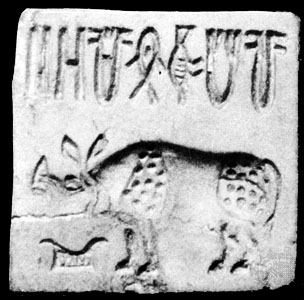 Hong Kong, April 30 : A team of scientists has refuted claims made by a research group that the puzzling symbols that were found on Indus Valley seals are proof of a written script of a language from an ancient civilization, and therefore a literate culture.
